
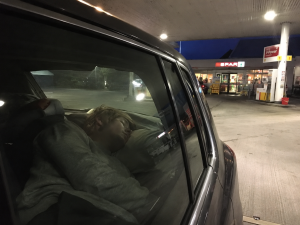
 After a long drive, many motorists wonder whether it’s actually legal to sleep in their car overnight. The short answer is: sometimes — but it depends entirely on the circumstances.
There’s no single law in England and Wales that automatically makes sleeping in a car illegal. However, where you park, whether alcohol is involved, and whether you’re causing an obstruction can all make a huge difference.
When Sleeping In Your Car May Be Acceptable
If a driver is genuinely tired, stopping somewhere safe to rest is generally seen as the sensible thing to do.
The Highway Code recognises fatigue as a serious risk on the roads.
Rule 91 of the Highway Code states:
“Driving when you are tired greatly increases your risk of collision. To minimise this risk:
• get sufficient sleep before setting off on a long journey
• avoid undertaking long journeys between midnight and 6 am, when natural alertness is at a minimum
• plan your journey to take sufficient breaks
• a minimum break of at least 15 minutes after every two hours of driving is recommended
• if you feel at all sleepy, stop in a safe place
• do not stop on the hard shoulder of a motorway
• caffeine drinks can help reduce tiredness but only for a short time
• take a short nap (around 15 minutes)”
In simple terms, if you are exhausted, sober, and parked legally somewhere safe, resting may be the safer option compared to continuing to drive tired.
Important Things That Matter
Whether sleeping in a vehicle becomes a problem often depends on factors such as:
- Where the vehicle is parked
- Whether parking restrictions apply
- Whether the vehicle is causing an obstruction
- Whether you are on private land
- Whether permission has been given to stay there
- Whether alcohol or drugs are involved
- Whether police believe you may intend to drive
The Big Mistake Many Drivers Make
One area that catches people out is drinking alcohol and then deciding to “sleep it off” in the car.
Many people assume that because they are not actively driving, they cannot commit an offence. Unfortunately, that is not always correct.
In UK law, there are offences connected to being “in charge” of a vehicle while over the legal alcohol or drug limit — even if the vehicle is parked.
Circumstances can matter, including:
- Where the keys are
- Whether the engine was recently running
- Where the person is sitting in the vehicle
- Whether there appears to be a likelihood of driving soon
Police officers may make decisions based on the overall situation they find at the roadside.
Motorway Services And Rest Stops
Motorway services are generally designed for drivers to take breaks safely.
Many service stations allow limited parking periods, while some permit overnight stays in designated areas.
If you feel dangerously tired during a journey, stopping safely is far preferable to continuing while fatigued.
However, drivers should remember:
- Hard shoulders are for emergencies only
- Emergency refuge areas are not places to sleep overnight
- Parking charges or time limits may still apply
Camper Vans And Motorhomes
A common misconception is that camper vans are treated completely differently in law.
In reality, they are still vehicles, and many of the same road traffic laws apply.
Things that may still matter include:
- Whether you have permission to stay overnight
- Whether the site allows overnight parking
- Whether alcohol is involved
- Whether there appears to be any intention to drive
Official campsites, paid overnight parking areas, and authorised camper locations are usually the safest option.
Private Land And Overnight Parking
Parking on private land without permission can create separate problems entirely.
Many holiday hotspots and coastal areas now have restrictions on overnight stays, particularly for larger vehicles and camper vans.
Always check for:
- Parking signs
- Permit requirements
- “No overnight parking” notices
- Local restrictions
Just because an area looks quiet does not necessarily mean overnight parking is allowed.
Safety Matters Too
Even if something may technically be legal, that does not always make it a good idea.
Sleeping in a vehicle can leave people vulnerable, particularly in isolated or unfamiliar areas.
Drivers should always think carefully about personal safety as well as the legal side.
Final Thoughts
Generally speaking, sleeping in your car is not automatically illegal in the UK. But the legality depends heavily on the full circumstances surrounding the situation.
Tiredness behind the wheel is extremely dangerous, and stopping safely is often the responsible choice. However, alcohol, parking restrictions, private land, and location can all quickly complicate matters.
When in doubt, it’s always safest to plan ahead and use authorised parking or accommodation where possible.